
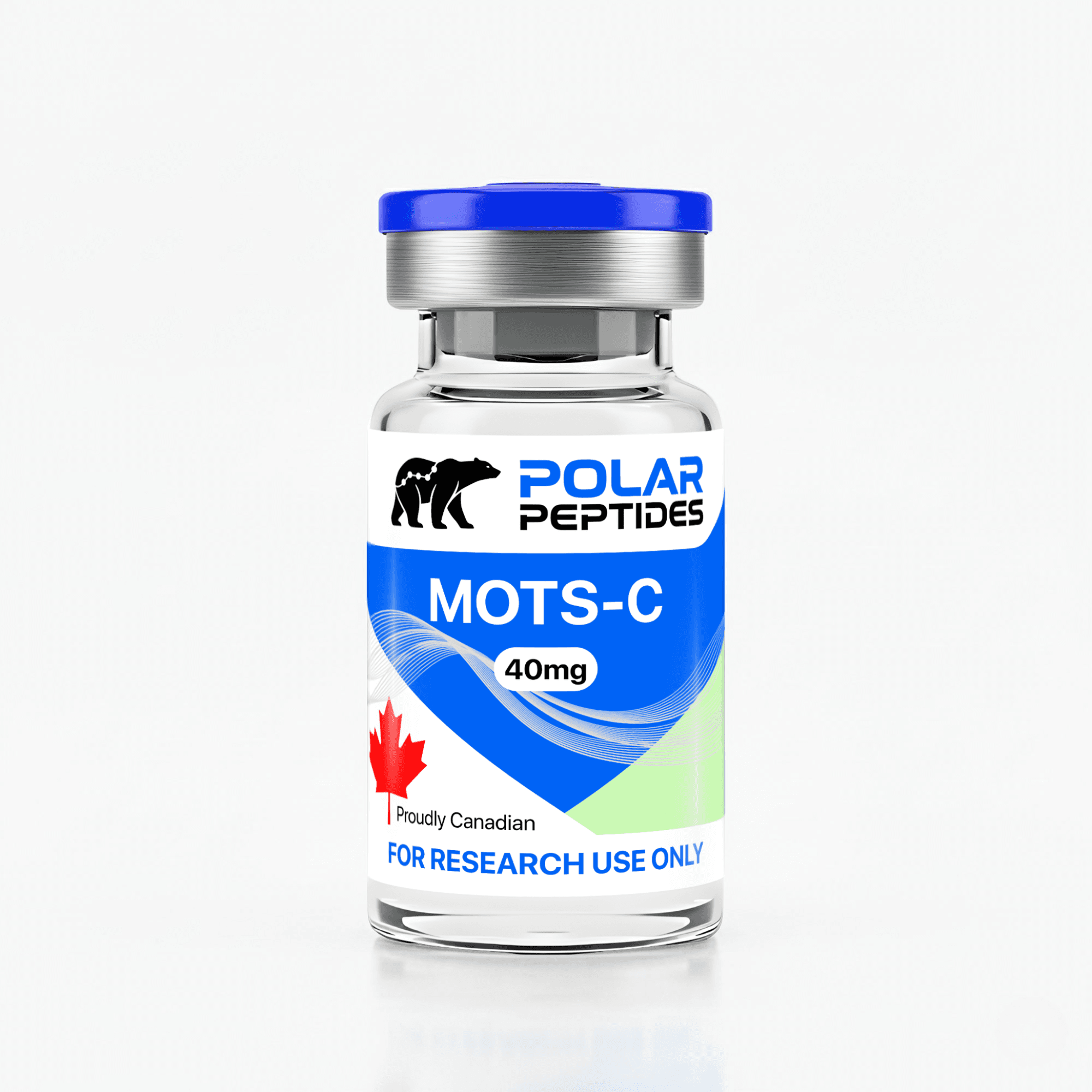
 99%+ purity
MOTS-c
★★★★★4.9 — customer reviewsMOTS-c is a peptide of mitochondrial origin. It is studied in the context of metabolic homeostasis, insulin sensitivity and physical endurance.
- Purity
- 99%+
For laboratory research use only. Not for human consumption, medical or diagnostic use.
About MOTS-c
MOTS-c (Mitochondrial ORF of the 12S rRNA type-c) is a short peptide of 16 amino acids encoded by the mitochondria's own genome — specifically by a short open reading frame within the 12S rRNA gene. It belongs to the class of so-called mitochondrial-derived peptides (MDPs), signalling molecules produced by the cell itself and studied as regulators of energy metabolism. In research, MOTS-c is often described as an "exercise peptide," as its blood levels rise naturally during physical activity.
How it works
According to research, the main mechanism of MOTS-c is linked to the folate cycle and purine synthesis: the peptide acts on this pathway so that AICAR accumulates — a potent activator of the enzyme AMPK, the cell's key energy "sensor." By activating AMPK in skeletal muscle, glucose uptake (notably via the GLUT4 transporter) and fat oxidation are enhanced, which at the cellular level resembles the effects of physical exercise. Under metabolic stress, MOTS-c translocates to the cell nucleus within minutes and interacts with stress-regulatory transcription factors — in particular NRF2 and genes carrying antioxidant response elements (ARE) — regulating the expression of hundreds of metabolic genes.
What's studied / benefits
- In studies, it improved insulin sensitivity and glucose uptake by skeletal muscle through activation of the AMPK pathway
- Enhanced fat oxidation (beta-oxidation) and, in animal models, reduced fat accumulation and weight gain on a high-calorie diet
- Studied as an "exercise mimetic" — it activates cellular pathways similar to those switched on during training
- In work by Reynolds and colleagues (Nature Communications, 2021), it increased physical performance and endurance in young, middle-aged and old mice
- Considered in the context of healthy ageing, since natural MOTS-c levels in tissues decline with age
Research applications
- Research into metabolic health: insulin sensitivity, glucose homeostasis, insulin resistance and obesity
- Study of energy metabolism and mitochondrial function
- Research into physical performance, endurance and recovery as an "exercise peptide"
- Scientific models of ageing and age-related decline in physical function (healthspan)
Of interest to: MOTS-c traditionally draws the greatest interest from researchers of metabolism and ageing, and among enthusiasts from athletes, biohacking followers and people interested in the topics of longevity and mitochondrial function.
- Class
- Mitochondrial-derived peptide (MDP), 16 amino acids
- Encoding
- 12S rRNA gene of the mitochondrial genome
- Primary target
- Folate–AICAR–AMPK pathway; skeletal muscle
- Link to age
- Natural levels decline with ageing and rise during physical exercise
This information is for educational purposes only and is not medical advice. MOTS-c is intended for laboratory research use only — not for human consumption, medical or diagnostic use.
Related products
 99%+ purity
GLP-3 / RT
RT — a next-generation research peptide for studying metabolism and weight.
 99%+ purity
Semaglutide
A GLP-1 analogue under active investigation in a metabolic context.
 99%+ purity
Tirzepatide
A Mounjaro analog — one of the most potent metabolic peptides for weight research.
 99%+ purity
5-Amino-1MQ
A small molecule — an NNMT inhibitor for metabolism research.