
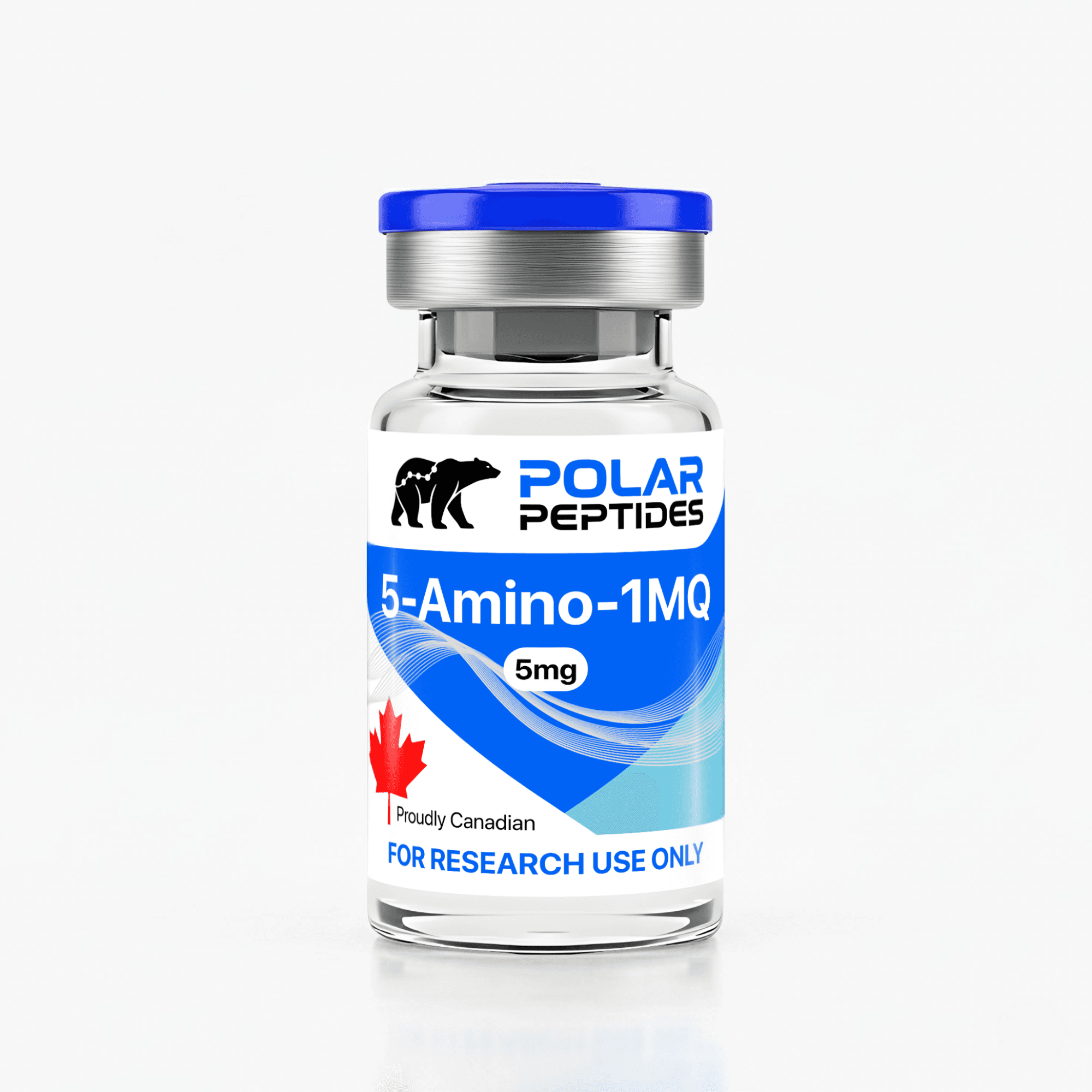
 99%+ purity
5-Amino-1MQ
★★★★★4.9 — customer reviews5-Amino-1MQ is a low-molecular-weight compound and an inhibitor of the NNMT enzyme. A subject of research into cellular metabolism and energy balance.
- Purity
- 99%+
For laboratory research use only. Not for human consumption, medical or diagnostic use.
About 5-Amino-1MQ
5-Amino-1MQ (5-amino-1-methylquinolinium) is a synthetic low-molecular-weight compound rather than a peptide, although it is often listed in peptide catalogues for researchers. Chemically, it belongs to the methylquinolinium derivatives and is a selective inhibitor of the enzyme nicotinamide N-methyltransferase (NNMT). The compound was first characterized around 2017 by scientists at the University of Texas Medical Branch (UTMB) while searching for ways to influence adipose tissue metabolism. Offered strictly for laboratory research.
How it works
The NNMT enzyme methylates nicotinamide, consuming S-adenosylmethionine (SAM) in the process and diverting nicotinamide away from NAD+ synthesis. 5-Amino-1MQ binds competitively to the active site of NNMT and blocks its activity, so that nicotinamide remains available for recycling via the NAD+ salvage pathway (involving the enzyme NAMPT), while SAM expenditure decreases. In research, this is accompanied by increased intracellular NAD+ levels, reduced formation of inactive 1-methylnicotinamide (1-MNA), and enhancement of NAD+-dependent energy-metabolism processes and sirtuin activity.
What's studied / benefits
- In preclinical mouse models of obesity, a reduction in body weight (around 35%) and a decrease in the size and volume of fat cells were observed — without any change in the amount of food consumed.
- An increase in intracellular NAD+ levels through the preservation of nicotinamide for its recycling pathway.
- In mouse models, activation of metabolically "dormant" adipocytes and enhanced fat oxidation and energy expenditure were noted.
- In studies on aging mice, inhibition of the enzyme linked to NAD+ metabolism was accompanied by improvements in grip strength, endurance, and recovery.
- Preclinical data also recorded improved glucose tolerance.
Research applications
- Studying adipose tissue metabolism and the regulation of body composition in preclinical models.
- Research into the NAD+ and methylation pathways (the SAM axis) at the cellular and animal level.
- Scientific investigation of metabolic syndrome, obesity, and insulin sensitivity.
- Research into the role of NNMT in muscle function, endurance, and aging processes.
Of interest to: The compound typically attracts the interest of metabolism and longevity researchers, as well as communities focused on body composition, athletic performance, and biohacking around the NAD+ axis.
- Compound class
- low-molecular-weight NNMT inhibitor (methylquinolinium derivative), not a peptide
- Half-life
- ≈6.9 h orally and ≈3.8 h intravenously (rat data)
- Oral bioavailability
- ≈38.4% (preclinical animal data)
- Storage
- in a freezer at −20 °C; protect from light and moisture
This information is for educational purposes only and is not medical advice. 5-Amino-1MQ is intended for laboratory research use only — not for human consumption, medical or diagnostic use.
Related products
 99%+ purity
GLP-3 / RT
RT — a next-generation research peptide for studying metabolism and weight.
 99%+ purity
Semaglutide
A GLP-1 analogue under active investigation in a metabolic context.
 99%+ purity
Tirzepatide
A Mounjaro analog — one of the most potent metabolic peptides for weight research.
 99%+ purity
MOTS-c
A mitochondrial peptide for research into energy metabolism.