 99%+ purity
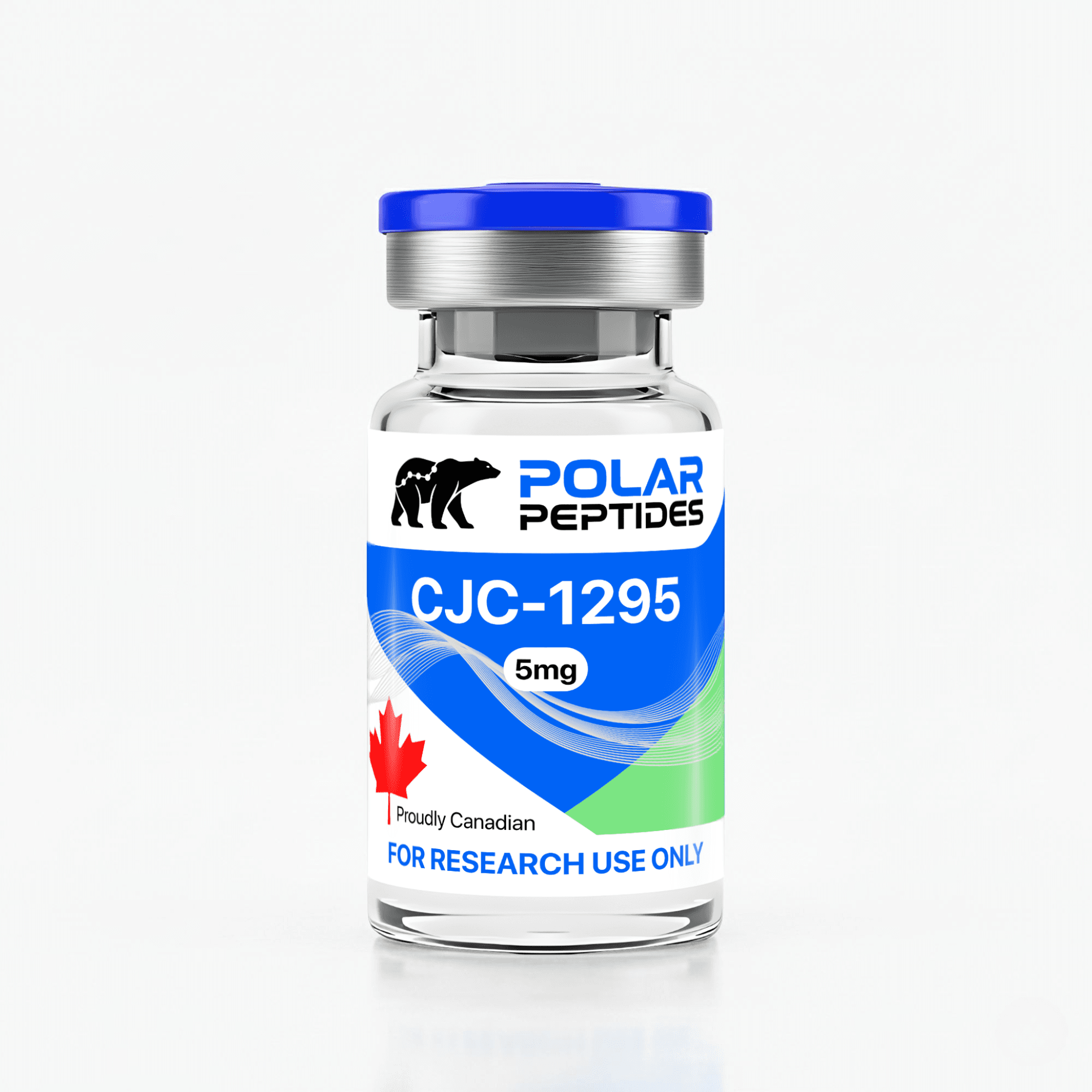
CJC-1295 (with DAC)
★★★★★4.9 — customer reviewsCJC-1295 is a synthetic analog of growth hormone-releasing hormone (GHRH). The DAC modification extends its half-life, making it a subject of research into prolonged GH stimulation.
- Purity
- 99%+
For laboratory research use only. Not for human consumption, medical or diagnostic use.
About CJC-1295 (with DAC)
CJC-1295 with DAC is a synthetic analog of growth hormone-releasing hormone (GHRH), developed by ConjuChem on the basis of the first 29 amino acids of natural GHRH. The molecule contains four amino acid substitutions (D-Ala at position 2, Gln at position 8, Ala at position 15, Leu at position 27) that make it resistant to breakdown by plasma enzymes. The abbreviation DAC (Drug Affinity Complex) denotes an additional fragment that covalently binds to blood albumin and greatly extends the peptide's circulation time.
How it works
CJC-1295 binds to GHRH receptors on the somatotrophs of the pituitary gland, activates adenylate cyclase and raises intracellular cAMP, stimulating the release of the body's own growth hormone (GH). Through its maleimide group, the DAC component forms a stable thioether bond with cysteine-34 of serum albumin, which protects the peptide from renal filtration and proteolysis and gives it albumin-like pharmacokinetics (a half-life of roughly 6–8 days versus ~30 minutes for the version without DAC). Unlike the administration of exogenous GH, the mechanism preserves natural pulsatile secretion, increasing both the amplitude of the peaks and the baseline level.
What's studied / benefits
- In a clinical study (Teichman et al., 2006, JCEM), a single subcutaneous dose raised plasma GH levels 2–10-fold for 6 or more days
- IGF-1 levels rose approximately 1.5–3-fold and remained elevated for 9–11 days after a single administration; repeated doses maintained elevated IGF-1 for up to 28 days
- Long-lasting action thanks to albumin binding: a single administration instead of the frequent injections required by short-acting GHRH analogs
- The mechanism preserves the physiological pulsatility of GH secretion rather than suppressing the body's own hormone production, as exogenous GH does
- In an early study in healthy adults, no serious side effects were reported
Research applications
- Studied as a model of prolonged stimulation of the GH/IGF-1 axis under laboratory conditions
- Investigated in the context of body composition — its effect on adipose and muscle tissue via IGF-1 signaling
- Used in scientific work on tissue repair processes and collagen and protein synthesis (the mTOR pathway, satellite cells)
- Historically underwent clinical trials for lipodystrophy and growth hormone deficiency (up to Phase II)
Of interest to: This peptide is typically of interest to researchers of the growth hormone axis, as well as athletes, biohackers, and longevity enthusiasts who study the mechanisms of recovery, body composition, and hormonal regulation.
- Class
- GHRH analog (Drug Affinity Complex, DAC)
- Half-life
- ≈6–8 days (DAC version); ~30 min without DAC
- Route of research administration
- Subcutaneous, in research protocols
- Status
- Banned by WADA; withdrawn from clinical development
This information is for educational purposes only and is not medical advice. CJC-1295 (with DAC) is intended for laboratory research use only — not for human consumption, medical or diagnostic use.