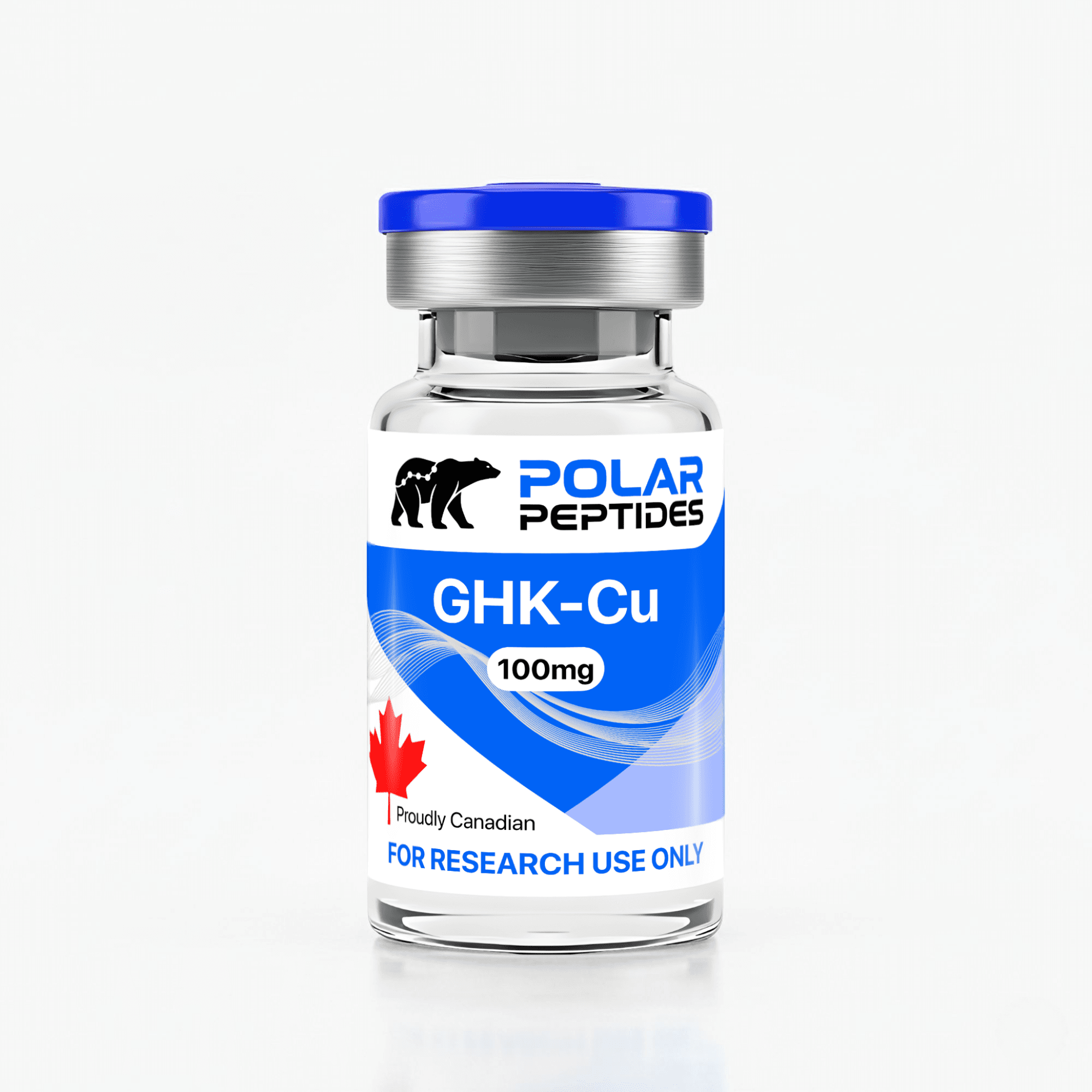
 99%+ purity
GHK-Cu
★★★★★4.9 — customer reviewsGHK-Cu is a copper tripeptide complex. It is widely studied in connection with skin remodeling, collagen synthesis and tissue repair.
- Purity
- 99%+
For laboratory research use only. Not for human consumption, medical or diagnostic use.
About GHK-Cu
GHK-Cu is a naturally occurring copper-containing tripeptide made up of three amino acids (glycine-histidine-lysine) bound to a copper(II) ion in a stable complex. It was first isolated by the researcher Loren Pickart in 1973 from human blood plasma; it is also present in saliva and urine. The plasma concentration of GHK declines naturally with age — from roughly 200 ng/ml at age 20 to around 80 ng/ml at age 60 — which coincides with a decline in the regenerative capacity of tissues. This material is offered strictly for laboratory research use only.
How it works
In research, GHK-Cu acts as a copper transporter, delivering the Cu(II) ion into cells "safely," since copper bound to the peptide has suppressed redox activity. At the level of gene expression, the peptide is described as a modulator of roughly 4,000 human genes: among other things, it upregulates a number of DNA-repair genes and regulates the balance between matrix metalloproteinases (MMPs) and their inhibitors (TIMP-1, TIMP-2). At ultra-low concentrations (on the order of 1–10 nanomoles), models show simultaneous stimulation of the synthesis and remodeling of collagen and glycosaminoglycans.
What's studied / benefits
- In cell cultures and animal models, stimulation of the synthesis of collagen, elastin, decorin and glycosaminoglycans (dermatan and chondroitin sulfate) has been described
- An anti-inflammatory effect has been documented — in particular, a reduction in TNF-alpha-induced interleukin-6 secretion in dermal fibroblasts
- Antioxidant effects and support for enzymes involved in connective-tissue formation and cellular respiration
- Stimulation of angiogenesis and increased secretion of the growth factors VEGF and bFGF in stem-cell studies
- Studies have noted increased expression of epidermal stem-cell markers (integrins, p63) in the concentration range of 0.1–10 micromoles
Research applications
- Research into skin regeneration, extracellular-matrix remodeling and signs of photoaging
- Experimental models of wound healing, including diabetic and ischemic wounds in rodents
- Study of effects on hair follicles and hair growth
- Fundamental research into the mechanisms of DNA repair, angiogenesis and stem-cell activity
Of interest to: This material is typically of interest to scientists and research laboratories studying tissue regeneration, dermatology and the biology of aging, as well as to biohackers and peptide-science enthusiasts who follow the publications in this field.
- Class
- Naturally occurring copper-containing tripeptide (Gly-His-Lys + Cu²⁺); cosmetic name — Copper Tripeptide-1
- Active concentrations in research
- On the order of 1–10 nmol for collagen/GAG; 0.1–10 µmol for stem-cell markers
- Storage (lyophilizate)
- In a dry, dark place at −20°C; stability roughly 18–24 months
- Integrity indicator
- A solution correctly bound with copper has a blue color; pale or clear indicates degradation (sensitive to light and oxidation)
This information is for educational purposes only and is not medical advice. GHK-Cu is intended for laboratory research use only — not for human consumption, medical or diagnostic use.